FIFA
How Heat And Humidity Reshape A Match Schedule
Kick-off times, cooling breaks and venue selection at summer tournaments are set by a combined heat measure rather than by air temperature alone.
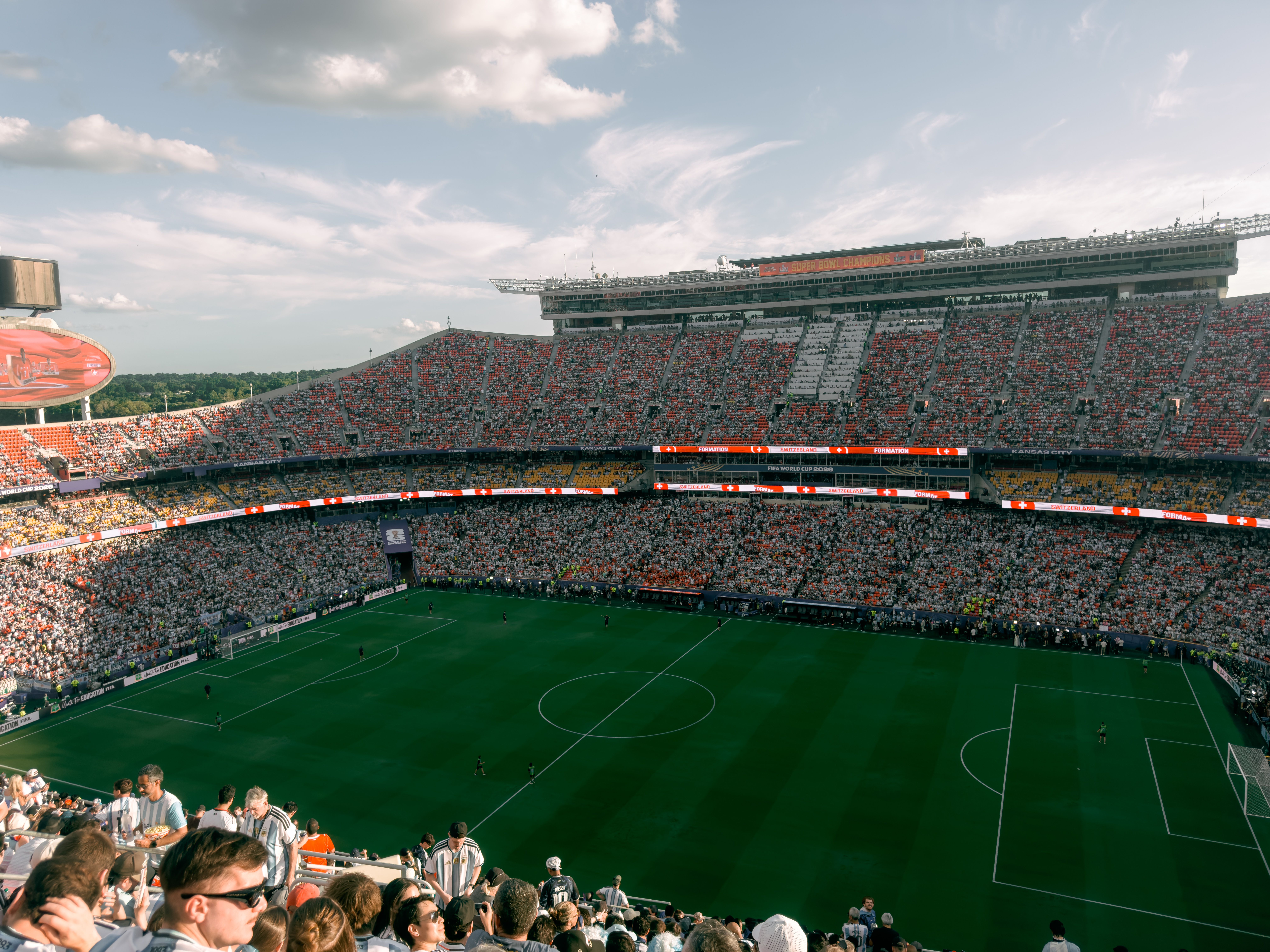
Summer tournaments in hot regions do not schedule matches around air temperature alone. The measure that matters combines heat, humidity, radiation and air movement, because those together decide whether a body can shed the heat it makes.
Sweat only works if it evaporates
Players cool themselves almost entirely by evaporating sweat from the skin, and evaporation slows as the surrounding air approaches saturation.
That is why humid heat is far more punishing than dry heat at the same temperature, and why a coastal venue can be harsher than an inland one that reads hotter.
Once evaporative cooling is limited, core temperature climbs during play and falls only slowly during stoppages.
Composite indices drive the decisions
Competitions use an index that folds humidity and radiant heat into a single figure, then attaches thresholds to it.
Crossing a threshold triggers defined actions, typically a mandatory cooling break in each half at a set point in the clock.
Because the index responds to sun as well as air, readings are taken at pitch level rather than from a general forecast.
Kick-off times are the main lever
The simplest way to reduce heat load is to play when the sun is low, which is why hot-climate tournaments push matches to evening slots.
Broadcast markets pull in the other direction, since audiences in distant time zones prefer earlier starts, and the schedule is a negotiated compromise.
Where that compromise cannot be reached, tournaments have moved the event itself to a cooler part of the year rather than accept midday play.
The pitch reacts too
Heat stresses cool-season grasses badly, and surface temperatures on a sunlit field run far above the air reading.
Groundstaff respond by raising cutting height slightly, watering to cool the surface, and using species or overseeding mixes suited to the local climate.
Air-conditioned stadiums extend the same logic, conditioning the bowl for both the players and the grass rather than for spectators alone.
Conditions change how the game is played
In severe heat, running distances fall and teams hold shape rather than press, since repeated high-intensity efforts cannot be recovered.
Matches consequently feature more possession in settled phases, fewer sustained pressing traps, and a greater share of decisive moments late.
None of that is a failure of preparation. It is the predictable result of playing a running sport in air that limits how fast a body can cool.
Also by Michael Cox
- Advanced Analytics: How passing lanes Shapes rotation rates OutcomesClub Rankings
- Advanced Analytics: How rotation rates Shapes rotation rates OutcomesClub Rankings
- Advanced Analytics: How compact defensive blocks Shapes rotation rates OutcomesClub Rankings
- Advanced Analytics: How overlap runs Shapes rotation rates OutcomesClub Rankings