Stadium Rankings
How Floodlight Quality Is Measured For Broadcast
Stadium lighting is specified by illumination level, uniformity, colour rendering and flicker, because slow-motion coverage exposes faults invisible to spectators.
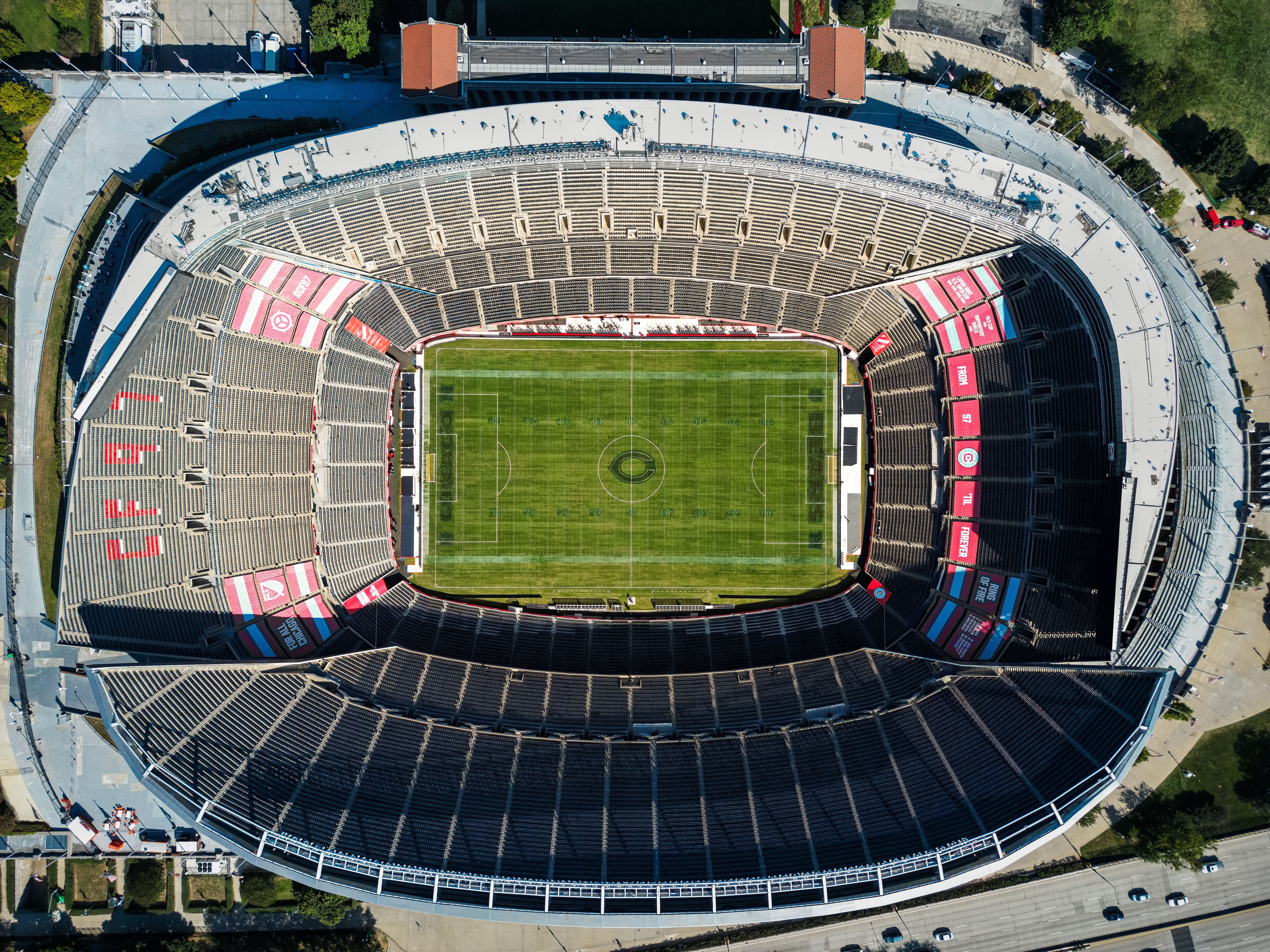
Stadium lighting is specified as an engineering system, not as a matter of brightness. Broadcast requirements, particularly slow motion, expose faults that no spectator in the stand would ever notice.
Illumination is measured on the field
The primary figure is the light falling on the playing surface, measured at points across a grid rather than at a single spot.
Requirements differ by level of competition, and a venue hosting major broadcast matches must meet a considerably higher figure than one hosting domestic fixtures alone.
Cameras also need light falling towards them from the players' faces, so vertical illumination is specified separately from the horizontal figure.
Uniformity matters more than peak brightness
If light levels vary sharply across the pitch, a camera tracking a moving ball must continually adjust exposure, which is visible as pulsing in the picture.
Uniformity is expressed as the ratio between the minimum and average readings across the grid, and a high ratio is the goal.
Achieving it requires many fixtures aimed carefully rather than a few powerful ones, which is why modern arrays contain large numbers of individually aimed units.
Flicker is invisible until it is slowed down
Lamps driven by alternating current pulse at the supply frequency, and a high-speed camera can sample that pulse as bands or brightness steps.
Modern installations use drivers that hold output steady, or arrange phases so that the combined output does not fluctuate.
Because super slow-motion replays are now central to coverage, flicker performance has become a specified requirement rather than an afterthought.
Colour rendering affects how everything looks
A light source that renders colours poorly makes grass and kits appear dull or shifted, which no amount of camera correction fully repairs.
Colour temperature is also specified so that all fixtures in a venue match, since a mixed array produces uneven tints across the field.
These figures are checked at commissioning and periodically afterwards, as output drifts over the life of a lamp.
Glare and spill are constraints on the design
Fixtures must be positioned so that neither players nor goalkeepers look directly into a source when following a high ball.
Light escaping beyond the stadium affects neighbours and is regulated, which limits where fixtures can be mounted and how they can be aimed.
Designing within those constraints while meeting uniformity and vertical illumination targets is why lighting is planned alongside the structure rather than added afterwards.
Also by Michael Cox
- Advanced Analytics: How passing lanes Shapes rotation rates OutcomesClub Rankings
- Advanced Analytics: How rotation rates Shapes rotation rates OutcomesClub Rankings
- Advanced Analytics: How compact defensive blocks Shapes rotation rates OutcomesClub Rankings
- Advanced Analytics: How overlap runs Shapes rotation rates OutcomesClub Rankings