Top 10 Goals
How Bobbles And Divots Decide Goalmouth Scrambles
The area in front of goal is the most worn part of any pitch, and the uneven surface there changes what happens when the ball is contested at close range.
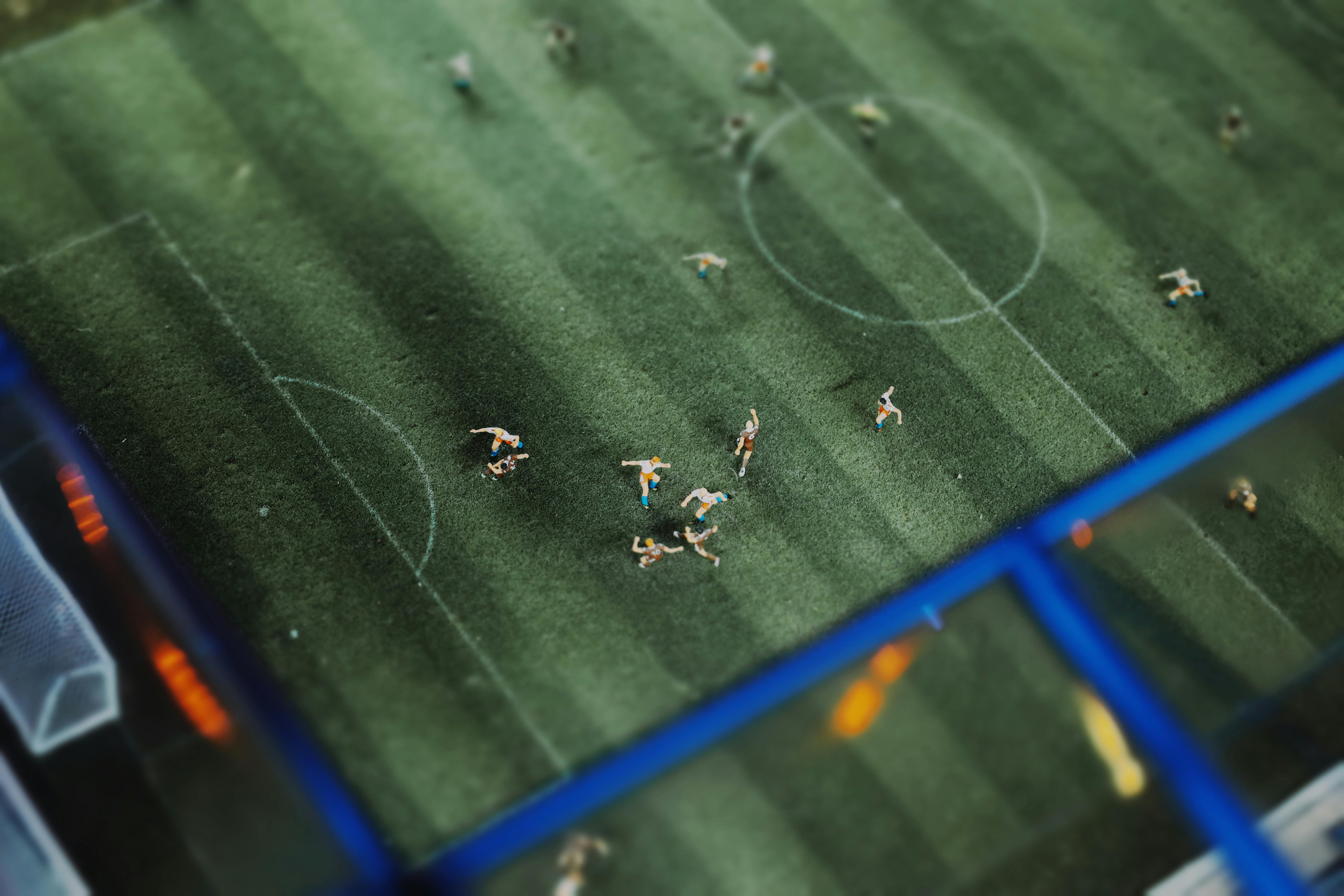
The six-yard area is the most heavily worn part of a football pitch, and by midwinter it is often the least even. What happens there when a ball is contested depends on a surface that no longer behaves predictably.
Goalmouths take a specific kind of damage
Wear comes from braking, turning and landing rather than from running, and all three concentrate where players compete for crosses and defend the line.
Goalkeepers add their own load, planting and diving repeatedly in the same small area across a season.
The result is turf that is thin or absent, with a soft, loose top over compacted ground beneath it.
Uneven ground breaks the first touch
A ball rolling across a divoted surface changes direction unpredictably, and a defender's clearance can be mistimed by the smallest deviation.
Attackers benefit disproportionately because they are reacting to whatever happens, while defenders are trying to execute a planned action.
That asymmetry is why scrambled goals cluster in the parts of the season when goalmouths are most worn.
Footing changes how bodies can be used
Loose or muddy ground reduces the grip available for holding a position under physical pressure.
Defenders who would normally shield the ball or step across an attacker find they cannot set their feet with confidence.
Goalkeepers face the same problem when pushing off to reach a ball across their body, and a slipped push-off is often decisive.
Groundstaff manage rather than repair
Divoting after each match presses lifted turf back into place, but it restores appearance faster than it restores root strength.
Some clubs relay the goalmouths mid-season with turf grown at a nursery, which is quicker than waiting for regrowth in cold months.
New turf takes weeks to knit, and until it does the seams themselves can be a source of unpredictable bounce.
Surface choice shifts the balance
Hybrid pitches hold together far better in these zones because stitched fibres carry load that depleted roots cannot.
Venues with reinforced surfaces therefore present a truer goalmouth in February, and the chaotic close-range goal becomes less common there.
The difference between grounds in this respect is one of the clearest ways that infrastructure shows up in the kind of goals a stadium produces.
It also changes how a match is refereed at close range, since a defender who slips on broken ground and an attacker who is pushed can look identical from twenty metres away.
Also by Michael Cox
- Advanced Analytics: How passing lanes Shapes rotation rates OutcomesClub Rankings
- Advanced Analytics: How rotation rates Shapes rotation rates OutcomesClub Rankings
- Advanced Analytics: How compact defensive blocks Shapes rotation rates OutcomesClub Rankings
- Advanced Analytics: How overlap runs Shapes rotation rates OutcomesClub Rankings